

What is
Giftedness?





Understanding Highly Giftedness
When we speak about highly gifted children, we are not simply describing young people who are “smart.” What sets them apart is the way their minds work, how they experience the world, and how deeply they feel. From an early age, many show an unusual hunger for knowledge. They ask endless questions, dive into complex topics such as space or history, and remember details long after adults have forgotten. Their curiosity can be boundless, yet this same intensity often leaves them restless, fidgeting in classrooms that move too slowly.
Highly gifted children also think deeply, sometimes about life, death, or the meaning of existence, well before their peers even begin to consider such questions. Their play often reveals a rich imagination and creativity. A box becomes a spaceship, a stick becomes a tool for a grand experiment. They lead others in games, not to dominate, but because their ideas are vivid and exciting. And yet, when peers don’t understand, frustration or loneliness can set in.
Perhaps the most striking quality is their adaptability. A child who draws intricate figures at home might choose to sketch stick figures at school, simply to fit in. This ability to hide their true level often means their needs go unnoticed. Teachers may see “average” work, while parents know the child’s real capabilities. Without recognition, these children risk underachievement, boredom, or even behavioral problems.
Highly giftedness, then, is both a strength and a challenge. These children thrive when given meaningful guidance, honest feedback, and opportunities to work with true peers. They need activities that are open-ended, cognitively challenging, and creative. Most of all, they need adults who listen with genuine interest, who encourage exploration without judgment, and who help them embrace both their talents and their humanity.


The Eight Areas of Giftedness

A highly gifted child may shine in one or two of these areas, or show strengths across several. Recognizing the full spectrum is essential. It reminds us to see the whole child, not only their academic abilities, but also their creativity, leadership, emotions, and talents.

Bloom’s Taxonomy
Highly Giftedness
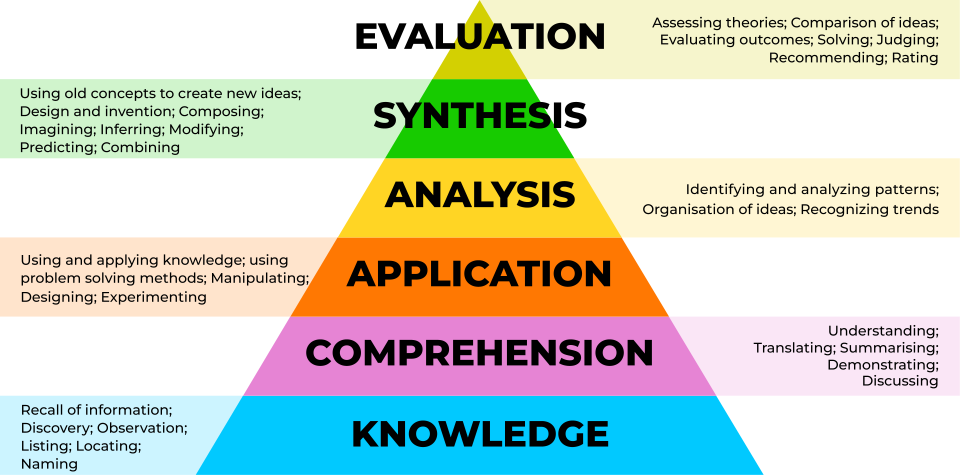
Bloom’s taxonomy helps us understand how gifted children process knowledge at a deeper level than their age peers. While many young children are still practicing remembering and understanding, highly gifted children often move quickly into higher-order thinking:
Analyzing
Comparing, categorizing, and spotting patterns. Even at five, a child might notice inconsistencies in rules or contradictions in stories.
Evaluating
Questioning fairness, testing ideas logically, and forming strong opinions that challenge adults.
Creating
Generating new solutions, inventing games, or telling stories and theories that surprise even their parents.
Applying
Using knowledge in new ways, such as solving puzzles, experimenting with numbers, or linking facts to imaginative play.



Maslow’s Hierarchy of
Needs and Gifted Development
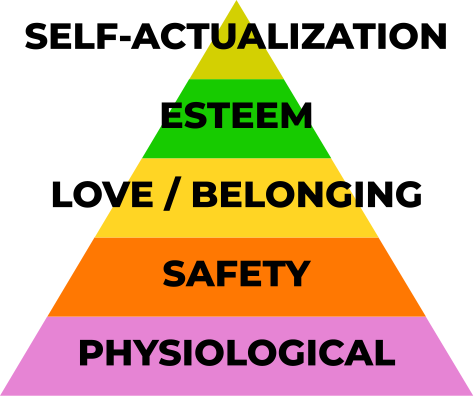
Gifted children may think differently, but their basic human needs remain the same. Maslow’s hierarchy shows us that for giftedness to flourish, the foundation must be secure:

In Conclusion
A highly gifted child may shine in one or two of these areas, or show strengths across several. Recognizing the full spectrum is essential. It reminds us to see the whole child, not only their academic abilities, but also their creativity, leadership, emotions, and talents.